

Emergency preparedness starts at home — be ready before disaster strikes
🚨 Be Ready Before Disaster Strikes
Preparedness is the foundation of emergency management. The actions you take today can save lives, protect property, and help your family recover faster from any emergency — whether it's a hurricane, flood, winter storm, or any other event.
Below are 12 practical ways to prepare your household. Click any card to learn how to take action.
📘 Are You Ready? An In-depth Guide to Citizen Preparedness ↗12 Ways to Prepare
Tap any item below for detailed information
Sign Up for Alerts and Warnings
Receiving timely warnings can make the difference between safety and disaster. Sign up for emergency notifications so you're aware of threats before they reach you.
- Register for Monmouth County emergency alerts via the SIRCOM platform
- Enable Wireless Emergency Alerts (WEA) on your mobile device
- Subscribe to National Weather Service notifications for your area
- Follow official Monmouth County social media channels
Make a Plan
A written household emergency plan ensures everyone knows what to do, where to go, and how to communicate when an emergency strikes.
- Identify two meeting places — one near your home, one outside the neighborhood
- Designate an out-of-area contact who can serve as a central point of communication
- Plan for pets and livestock — they're family too
- Account for special needs (medications, mobility, dietary)
- Review and update your plan at least once a year
Save for a Rainy Day
Emergencies are expensive. Building a financial cushion protects your family from the unexpected costs of evacuation, repair, and recovery.
- Start an emergency savings account — even $500 makes a difference
- Goal: build up to 3-6 months of essential expenses
- Keep some cash on hand — ATMs and card readers may not work after a disaster
- Know your insurance deductibles and have them available
Practice Emergency Drills
A plan you've never practiced is just a piece of paper. Regular drills build muscle memory so your family responds instinctively under pressure.
- Practice fire evacuation from every room of your home
- Test smoke and carbon monoxide detectors monthly
- Drill shelter-in-place procedures (severe weather, hazardous materials)
- Practice reunification at your designated meeting places
- Run drills at different times of day — including at night
Test Family Communication Plan
During emergencies, local phone lines may be jammed. A well-tested communication plan keeps your family connected when it matters most.
- Designate an out-of-state contact — long-distance lines often work when local ones fail
- Make sure every family member memorizes important phone numbers
- Keep printed emergency contact cards in wallets and backpacks
- Test the plan twice a year by actually calling the contact
- Know how to text — texts often go through when calls fail
Safeguard Documents
Critical documents are nearly impossible to replace quickly. Protect them now to avoid weeks of paperwork battles after a disaster.
- Store originals in a waterproof, fireproof container at home
- Make digital copies stored securely in the cloud
- Give a copy set to your out-of-area contact
- Documents to include:
- IDs, passports, birth certificates, Social Security cards
- Insurance policies (home, auto, health, life)
- Medical records and prescriptions
- Financial records, bank info, will/trust documents
- Property deeds, vehicle titles
Plan with Neighbors
Your neighbors are your first line of help during a disaster. Building those relationships before a crisis creates a stronger, more resilient community.
- Introduce yourself to neighbors and exchange contact info
- Identify elderly, disabled, or vulnerable individuals who may need help
- Discuss shared resources — generator, chainsaw, vehicles
- Plan who checks on whom after a major event
- Consider organizing a neighborhood emergency group
Make Your Home Safer
Mitigation reduces the damage when disaster strikes. Small home improvements today can prevent major losses tomorrow.
- Know how to shut off gas, water, and electricity
- Install and maintain smoke and carbon monoxide detectors
- Secure water heaters and heavy furniture to walls
- Trim trees and clear branches that could fall on your home
- Clear gutters and drains before storm season
- Consider storm shutters or impact-resistant windows
- Maintain a working fire extinguisher on every floor
🏠 Retrofitting Your Home
The most important precaution you can take to reduce damage to your home and property is to protect the areas where wind can enter. According to recent wind technology research, it is important to strengthen the exterior of your house so wind and debris do not tear large openings in it.
You can do this by protecting and reinforcing these five critical areas:
A great time to start securing — or retrofitting — your house is when you are making other improvements or adding an addition. Remember: building codes reflect the lessons experts have learned from past catastrophes. Contact the local building code official to find out what requirements are necessary for your home improvement projects.
Know Evacuation Routes
When evacuations are ordered, roads jam fast. Knowing your routes — and alternates — could mean the difference between safety and being stuck in traffic during a storm.
- Identify your hurricane evacuation zone using the Know Your Zone tool
- Plan at least 2 routes out of your neighborhood
- Know the location of nearest shelters
- Practice driving the routes before you need them
- Keep your gas tank at least half full during storm season
📢 Monmouth County Evacuation Instructions
Monmouth County uses the following evacuation instructions:
Evacuation Recommendation
Monmouth County may recommend that certain residents, visitors and businesses evacuate due to their personal risk of being impacted by a storm or other emergency. A recommendation might be issued so that residents who need extra time (mobility challenges, visitors packing belongings, special arrangements) can leave early — or in advance of an evacuation order to reduce evacuation time.
Evacuation Order
Monmouth County may order residents, visitors and businesses of designated areas deemed to be in danger of being impacted by a storm or other emergency to evacuate. This order is used when designated areas are predicted to potentially receive life-threatening or severe property damage, or when access by first responders could be impeded.
The above evacuation conditions are considered when a storm or incident is expected to affect a large portion of the county. Local Public Safety Officials may enact similar evacuation conditions when a storm or emergency is more geographically specific to a particular community.
Regardless of the type of evacuation, residents are encouraged to stay with family or friends who live outside of the pre-designated evacuation zones. Municipal Reception Centers and County Shelters will be opened, but should only be used as a last resort.
Evacuation orders are issued by pre-designated zones: A, B, C, or D. Evacuation orders will be disseminated through all available commercial and social media outlets.
🗺️ Find Your Zone — Know Your Zone Page🏠 Evacuation Shelters & Municipal Reception Centers
🏛️ County Shelters
- Monmouth County has several shelters that will be accessible when an Evacuation Order is issued
- Provide a safe place for residents who don't have family/friends outside the evacuation zones
- Designed to be short-term solutions — limited space and services
🏘️ Municipal Reception Centers
- Each municipality has a designated Reception Center
- Municipal Emergency Management gets residents within the evacuation zone to their Reception Center (personal vehicles OR public safety vehicles)
- Provides extremely limited services for a short time
- From there, County Transportation brings residents to the County Shelter
- Residents are not permitted to drive personal vehicles to County Shelters
🔄 Post-Incident Shelter Closing
Once the evacuated areas are deemed safe, Monmouth County transportation assets return residents from the County Shelter back to the Municipal Reception Center. From there, residents may return home.
Assemble or Update Supplies
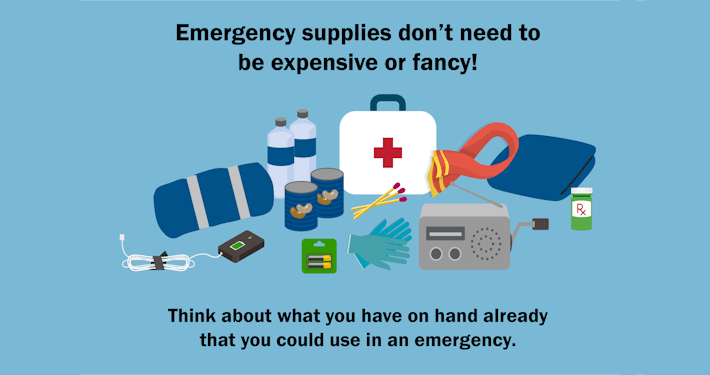
Ensure you and your family are prepared before the next disaster impacts your community. Following an emergency or disaster, you may lose access to basic services such as power and water, and be subject to limited or no access to essentials like food and water. Stock up on essentials now and build a disaster supply kit to last you and your family for a minimum of 3 days.
Each individual or family disaster supply kit will differ based on personal needs. Review the list below to help you get started on basic items to include. Assess your individual and family needs to determine other critical items to include.
📋 Disaster Supply Kit Checklist
- 💧 Water — for drinking, cooking and sanitation. Minimum 1 gallon per person per day for 3 to 7 days.
- 🥫 Food — minimum 3-7 days supply:
- Non-perishable packaged or canned food and juices
- Manual can opener
- Foods for individuals with dietary restrictions (infants, elderly, etc.)
- Snack foods
- Cooking tools and fuel
- Paper plates and plastic utensils
- 🔦 Flashlight and Extra Batteries
- 🛏️ Pillows, Blankets and/or Sleeping Bags
- 👕 Clothing — complete change of clothes for your area's climate. Include sturdy shoes to protect from debris.
- 🩹 First Aid Kit, Prescription Medication and Other Medicines
- 📻 Radio — battery operated AND NOAA weather radio
- 🧽 Cleaning Supplies — garbage bags, moisture wipes, sanitation items
- 👶 Special Items — assess all family member needs (infants, elderly, access & functional needs)
- 💵 Cash — banks and ATMs may not be available for extended periods
- 🎲 Toys, Books and Games
- 📂 Important Documents — store in waterproof container AND save electronically (insurance, medical, bank, Social Security, etc.)
- 🔨 Tools
🐾 Pet Care Items
- Proper identification / immunization records
- Ample supply of food and water
- Carrier or cage
- Medications
- Muzzle and leash
- Photo of you and your pet(s) — in the event you are separated from your pet, having an updated photo will help validate pet ownership
Get Involved in Your Community
The strongest communities are built before disaster strikes. Get trained, get involved, and become part of the solution.
- Join the Community Emergency Response Team (CERT) — free training in disaster response
- Volunteer with local Red Cross chapter
- Take first aid and CPR classes
- Register for Medical Reserve Corps if you have healthcare skills
- Attend community preparedness workshops
- Help organize neighborhood preparedness events
Document & Insure Property
If disaster strikes, proper documentation and insurance can be the difference between full recovery and devastating loss.
- Take a video walkthrough of your entire home (open closets and drawers)
- Photograph high-value items with serial numbers visible
- Keep receipts and appraisals for valuable possessions
- Review your homeowner's or renter's insurance annually
- Consider flood insurance — even outside high-risk zones (regular policies don't cover floods)
- Understand your deductibles and exclusions
- Store insurance documents and inventory off-site or in the cloud
If You or Someone You Know is Disabled Click here to learn more about disability disaster information ▼

The Monmouth County Office of Emergency Management, in coordination with each local emergency management agency, supports the state-developed registry to allow residents with special needs to register with their local emergency management agency to receive assistance during a disaster.
Providing as much information as possible will allow emergency management officials to plan accordingly for future disasters. You will be e-mailed periodically to verify the information provided is correct and to make any necessary changes. Individual surveys will be archived after one year if not verified.
Why Should You Register?
Personal preparedness is at the heart of public safety. Advance planning is especially important for people with disabilities, access and functional needs who may find it difficult to self-evacuate. New Jersey Register Ready is designed to help emergency responders plan for locating and safely evacuating people who could find it difficult to help themselves during a major disaster.
🔒 Will My Privacy Be Protected?
The information within the registry is considered confidential and will only be used in the planning for and provision of emergency services. Completing the form does not automatically qualify the individual for a special needs shelter. Registrants who need assistance should always contact their local police for immediate help and 9-1-1 for life-threatening emergencies.
📚 Important Links for More Information
🏛️ State Resources
🇺🇸 Federal Resources
Questions concerning registration, sheltering, transportation and evacuation, please contact:
If You Have Pets — Make a Pet Plan Protect all family members, including the four-legged ones ▼
The best way to protect your family from the effects of a disaster is to have a disaster plan. If you are a pet owner or have larger animals (i.e. livestock), it is important that you also consider their needs when developing your disaster plan.
⚠️ If You Evacuate — DO NOT LEAVE PETS OR ANIMALS BEHIND
It is unlikely for pets or larger animals to survive on their own. If by some chance they do, you may not be able to find them when you return. Prepare now and protect your family and pets before the next disaster strikes.
🏠 Do You Have a Safe Place to Take Your Pets?
Service animals who assist people with disabilities are allowed in Monmouth County shelters. It may be difficult to find shelter for your animals in the midst of a disaster, so plan ahead.
- Contact hotels and motels outside your immediate area to check pet policies. Search at PetsWelcome NJ.
- Ask friends, relatives, or others outside the affected area whether they could shelter your animals.
- Prepare a list of boarding facilities and veterinarians who could shelter animals in an emergency (24-hour phone numbers).
- Ask local animal shelters if they provide emergency shelter or foster care (last resort).
🌪️ What to Do When Disaster Approaches
- If you're not home when evacuation is ordered, arrange for a trusted neighbor to take your pets and meet you at a prearranged location.
- Keep dogs securely leashed and transport cats in carriers. Animals react differently under stress.
- When you return home, give pets time to settle back into their routines.
🐴 Planning for Larger Animals (Livestock)
- Disaster supply kit with: animal ID, food/water, medications, handling equipment, dry bedding, windbreaks
- Develop an evacuation plan with multiple routes and shelter sites suitable for your animals
- Ensure you have the transport resources — vehicles, trailers, experienced drivers and handlers
📚 Additional Pet Resources
Building resilience in Monmouth County
Hover over any card to preview · Click to open the full safety guide