MCSO Logo
← Back to Emergency Management
☣️

Hazardous Materials Incidents

Recognize the signs · Know what to do · Stay protected

☣️ What Are Hazardous Materials?

Hazardous materials — also called HAZMAT — are chemical, biological, radiological, or nuclear substances that can pose a danger to people, property, or the environment when released or improperly handled.

HAZMAT incidents can occur anywhere — at industrial facilities, on highways or rail lines, at fuel storage sites, or through accidental spills. They can happen without warning and may require immediate action.

Monmouth County's Local Emergency Planning Committee (LEPC) works year-round to identify hazardous facilities, plan responses, and protect the public from HAZMAT threats.

🏷️
HAZMAT Placards & Labels
Common identifiers you may see on trucks, rail cars & containers

Diamond-shaped placards are required by the U.S. Department of Transportation on vehicles, rail cars, and containers transporting hazardous materials. Each color and number tells emergency responders — and the public — what type of hazard is present.
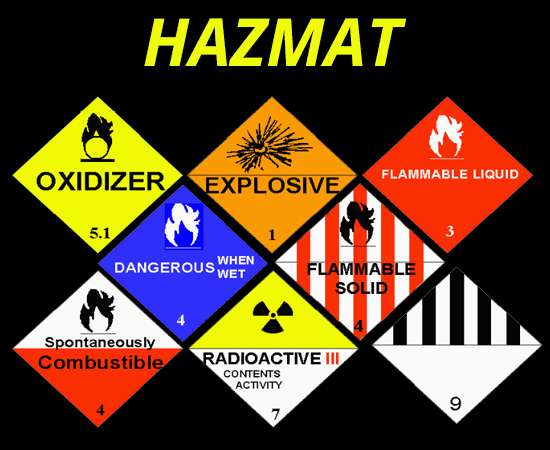
HAZMAT Placard Reference Chart

If you see one of these placards on an overturned vehicle or leaking container — stay away, call 9-1-1, and report what you observed.

🚨 Emergency

Call 9-1-1 Immediately

If you witness a suspected HAZMAT spill, leak, fire, or release — call 9-1-1 immediately. Do not approach. Move upwind & uphill if outdoors, or shelter-in-place if indoors.

⚗️ What Is a Hazardous Materials Incident?

A hazardous materials incident is the uncontrolled release of a substance that could threaten human health, safety, property, or the environment. These can range from minor spills handled quickly by local responders to major releases requiring evacuation of entire communities.

HAZMAT incidents are categorized into four main hazard types:

  • Chemical — industrial chemicals, fuels, solvents, pesticides, cleaning agents
  • Biological — bacteria, viruses, toxins, infectious materials
  • Radiological — radioactive materials from medical, industrial, or research sources
  • Nuclear — fissile materials capable of causing significant radiation exposure

Incidents may result from transportation accidents, industrial spills, equipment failures, natural disasters, illegal dumping, or intentional acts of terrorism.

📍 Common Sources of HAZMAT in Monmouth County

Hazardous materials are transported and stored throughout Monmouth County. Knowing potential sources near you helps you understand and prepare for risks:

  • Major Highways — Garden State Parkway, NJ Turnpike, Route 18, Route 9, Route 35, Route 36, and others carry tankers and trucks transporting fuels and chemicals daily
  • Rail Lines — North Jersey Coast Line and freight rail transport industrial materials through the county
  • Industrial Facilities — Manufacturing plants, chemical processors, and storage facilities (regulated under SARA Title III and EPCRA)
  • Fuel Storage & Distribution — Gas stations, propane suppliers, fuel oil depots
  • Pipelines — Natural gas distribution and transmission lines run throughout the county
  • Hospitals, Schools & Laboratories — Medical, research, and educational facilities use and store regulated chemicals
  • Marine Terminals & Port Operations — Raritan Bay and coastal waters see chemical and fuel shipments
⚠️ Recognize the Warning Signs of a HAZMAT Incident

You may be the first to notice a HAZMAT release. Watch for these warning signs:

💨
Visible smoke, fog, vapor cloud, or mist
👃
Unusual chemical odors
💧
Visible spill, puddle, or leak of unknown liquid
🐦
Dead or sick animals, birds, fish, or vegetation
👁️
Stinging eyes, throat irritation, or difficulty breathing
🚨
Multiple emergency vehicles, sirens, or warnings
🚛
Overturned truck or rail car with placards
🔥
Unusual smoke, flames, or hissing sounds
📢
Emergency broadcast announcements or alerts
⚠️ Important

If you suspect a HAZMAT incident, do NOT approach. Move upwind and uphill if outdoors. Call 9-1-1 from a safe distance and report what you observed.

🏠 Shelter-in-Place vs Evacuation

Emergency officials will decide whether you need to shelter-in-place or evacuate based on the type and severity of the incident. Follow their instructions carefully.

🏠 If Told to Shelter-in-Place
Stay Inside & Seal Up
  • Go inside immediately and bring pets with you
  • Close and lock all windows and doors
  • Turn off all HVAC, fans, and ventilation systems
  • Close fireplace dampers and vents
  • Seal gaps with plastic sheeting and duct tape (around doors/windows)
  • Move to an interior room above ground level with few or no windows
  • Tune to local news or NOAA Weather Radio
  • Do NOT leave until officials announce it is safe
🚗 If Told to Evacuate
Leave Quickly & Safely
  • Follow instructions from emergency officials
  • Take only essential items (medications, ID, phone, cash)
  • Use designated evacuation routes only
  • Drive upwind and uphill away from the incident
  • Close all windows and turn off ventilation in your vehicle
  • Bring pets and important documents if time allows
  • Help neighbors who may need assistance
  • Do NOT return until officials say it is safe
After a HAZMAT Incident

Once emergency officials announce the area is safe, take these steps:

  • Wait for the All Clear before re-entering your home or returning to the area
  • Open windows and vents to allow fresh air to circulate
  • If you were exposed, seek medical attention immediately — even if you feel fine, symptoms may appear later
  • Wash thoroughly with soap and water; bag and seal any contaminated clothing
  • Do not eat food, drink water, or use products that may have been exposed
  • Do not touch spilled material — let trained responders handle cleanup
  • Report any new concerns, lingering odors, or health symptoms to authorities
  • Document damage with photos for insurance claims
🏥 Health Effects May Be Delayed

Some HAZMAT exposures cause delayed health effects that may appear hours, days, or even weeks later. If you were near an incident, monitor your health and consult a medical professional if symptoms develop.


⚠️
HAZMAT Alerts
Know the difference between an Advisory and a Warning
🔗
Additional Resources
Official HAZMAT preparedness & safety information
📋 🏛️ 🏥 ⚕️ 🚛 🌳 📊 🧪 🏛️

Location & Phone Numbers

Monmouth County Sheriff's Office
2500 Kozloski Rd
Freehold, NJ 07721
Emergency
9-1-1
Non-Emergency
(732) 577-8700
Main Number
(732) 431-6400

Follow Us

Facebook X / Twitter YouTube Instagram LinkedIn

Inside MCSO

About the Sheriff Employment / Join the Team Internships Current Employees Veterans Services Contact Us

Divisions

Civil Process Communications Corrections Emergency Management EMS & Medstar Fire Safety Services Law Enforcement Police Academy ↗ Special Operations Stars Facility Technical Services

Quick Links

Inmate Search Foreclosure Sales News Releases Videos Community Programs Transparency in Policing Policy FAQs OPRA Request Form Medical Record Request
🔒
Staff Portal
Password protected — authorized personnel only
🔒 MARP 🔒 OEM Private
MCSO Logo
© 2026 Monmouth County Sheriff's Office. All Rights Reserved.
Privacy Policy Accessibility Sitemap